Lion One
Integrated crushing & screening station
- Capacity
- 20–70t/h
- Feed size
- 200mm
- Footprint
- 35m2 · 11.7 × 3 × 3.1 m
- Drive
- 100%full hydraulic
C&D Waste Recycling
The WEI LAN Lion One construction waste processing line combines crushing, trommel screening, vibrating screening, magnetic separation, air separation, baling, weighing, and digital control for construction waste, decoration waste, demolition waste, and bulky waste projects. As a construction waste recycling plant manufacturer, WEI LAN supports turnkey C&D waste recycling plant planning from process review to equipment delivery.
Core Data
Heavy-duty mobile station designed for construction, decoration, demolition, and bulky waste streams. All four core parameters are listed in their working ranges.
Lion One
Integrated crushing & screening station
Equipment List
The equipment list is configured for recycled aggregate recovery, light material separation, metal removal, automated control, operational reporting, and delivery scope review.
Integrated crushing and screening station with 200 mm feed size, 35 m2 footprint, and full hydraulic drive.
Capacity options fit different municipal, industrial, and construction waste resource utilization projects.
Supports shredder, trommel screen for construction waste, vibrating screen for recycled aggregate, magnetic separator for C&D waste, positive-negative pressure air separation system for construction waste, and baler.
Manual, automatic, and remote control modes support start-stop control, alerts, weighing flow, and reporting.
Process Flow
Watch the integrated Lion One line demonstrate crushing, screening, conveying, separation, and recovery as one continuous process.
C&D process videoCrushing, screening, conveying, separation, and recovery in one operating view
Comparison
Comparison data shows the WEI LAN integrated C&D waste line against a typical multi-machine site setup on the metrics that drive total cost of ownership.
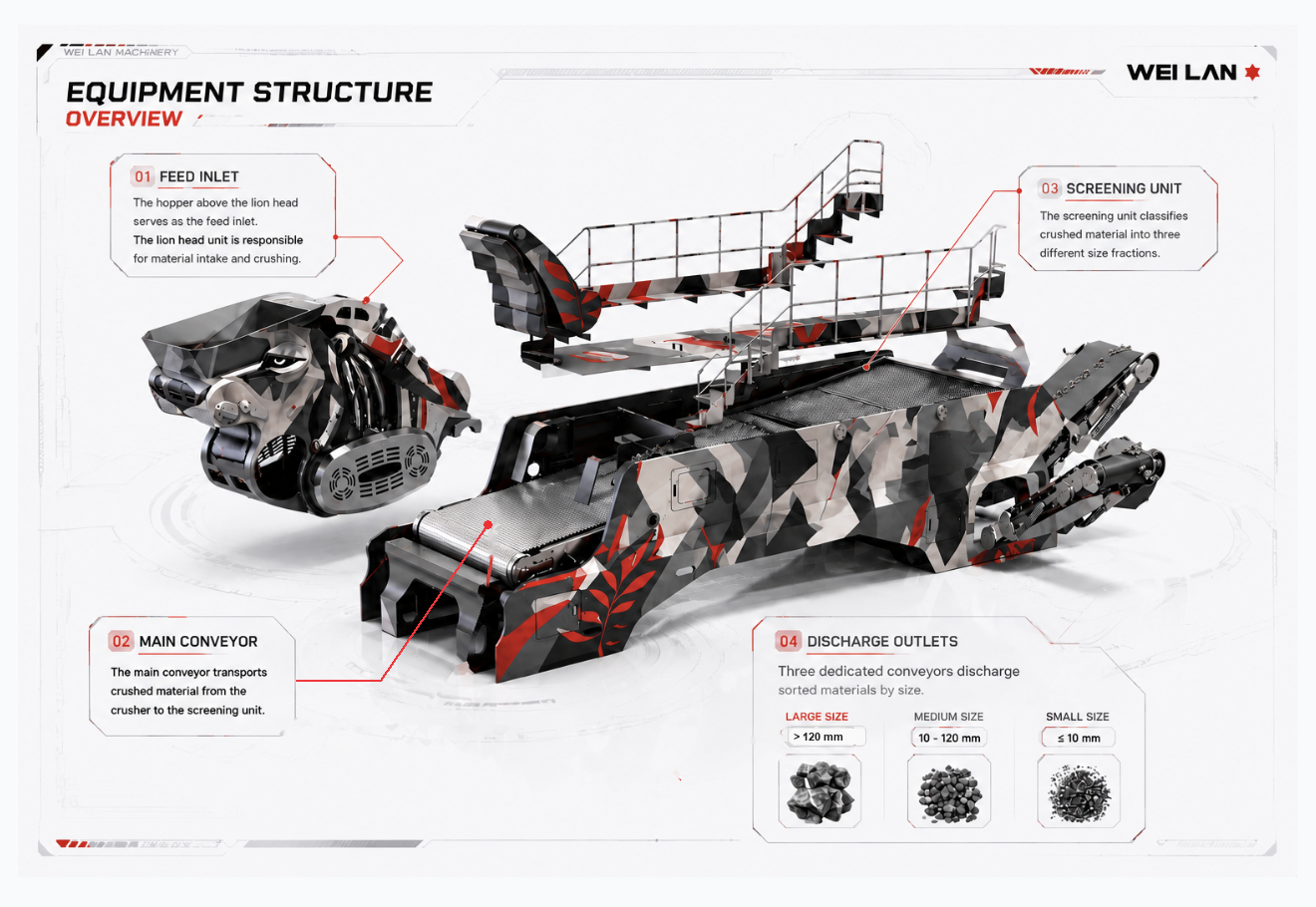
Integrated mobile station replaces a multi-machine yard layout in a single skid.
Capacity bars are scaled by upper rated throughput on the 70 t/h ceiling, while the labels keep each model's full operating range.
Roughly 25% lower power per tonne sorted, calculated at rated throughput.
Mobile station ships on standard trailers; on-site work is positioning and hookup only.
FAQ
Use these answers to prepare early supplier comparison, internal feasibility review, and RFQ information for construction waste recycling equipment.
Cost factors depend on target capacity, feed size, required output, crusher and screening scope, magnetic separation, air separation, baling, control system, site layout, and commissioning support.
The line is built for construction waste, decoration waste, demolition waste, bulky waste, and mixed light materials that need crushing, screening, metal recovery, and light-heavy separation.
A typical turnkey C&D plant equipment list may include feeding, crushing, trommel screening, vibrating screening, magnetic separator for C&D waste, air separation system, baler, weighing, PLC control, and remote monitoring.
Capacity should be matched to hourly input, material density, expected uptime, output specification, local transport flow, and site footprint. WEI LAN can review project data before recommending a 20-70 t/h configuration.
RFQ Input
Use this checklist to prepare enough engineering context for capacity selection, module configuration, delivery scope, transport planning, and installation review.
Estimate concrete, brick, wood, plastic, metal, soil, decoration waste, bulky waste, and light impurity proportions.
Confirm maximum incoming size, average lump size, pre-sorting condition, and whether oversize material needs pre-crushing.
Share hourly throughput, working shifts, expected uptime, seasonal load changes, and required final aggregate specification.
Provide available footprint, truck movement path, power access, water and dust-control limits, and discharge storage zones.